Planning the Optimal Workflow for a Coconut Processing Factory Layout
- Feng De
- Nov 14, 2025
- 5 min read

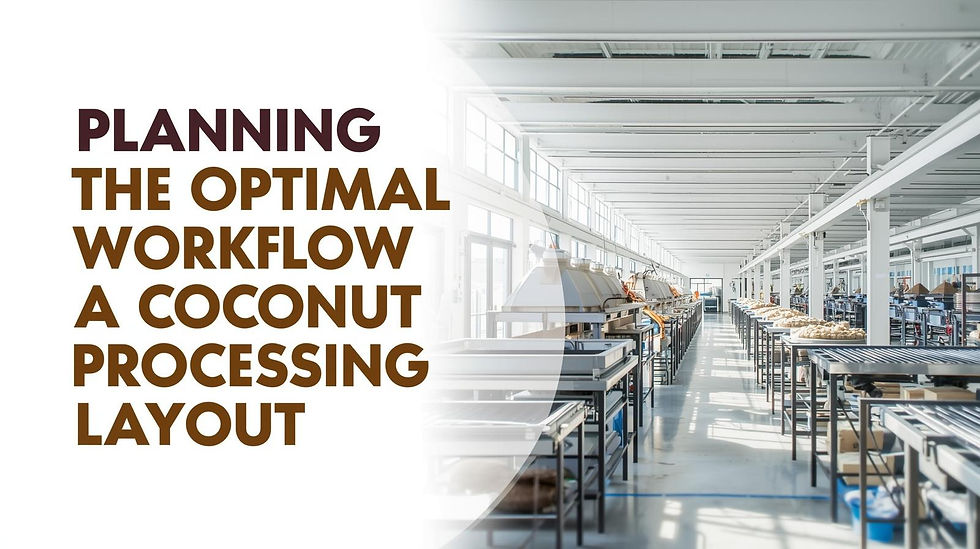
Opening a new coconut processing facility, or overhauling an existing one, is a massive undertaking. The machinery itself is only half the battle. The true secret to long term profitability lies in the workflow—how the raw material moves through your factory from the loading bay to the final packaging line. A poorly planned layout can introduce bottlenecks, increase labor costs, and even compromise food safety, effectively neutralizing the efficiency gains of your expensive new equipment.
For entrepreneurs looking to compete in the demanding global market for coconut water, meat, and oil, every foot of factory floor space must be optimized. The goal is to create a seamless, linear flow that minimizes cross contamination, maximizes throughput, and adheres strictly to international hygienic standards. This is not just about aesthetics; it's about engineering your business for peak performance and longevity.
The Golden Rule: Linear and Unidirectional Flow
The single most important principle in food processing plant design is to ensure that the material moves in a straight line without ever doubling back or crossing its own path. This is the foundation of contamination control and process efficiency.
Why Linear Flow Matters
Contamination Control: In coconut processing, the product transitions from having a rough, dirty outer husk to being a pure, food-grade liquid or meat product. The "dirty" section of the line (dehusking and washing) must be physically separate from the "clean" section (cutting, filtering, and packaging). Linear flow ensures the raw, contaminated material never touches or passes near the finished product.
Labor Efficiency: A linear layout means workers can specialize in a single task and simply pass the product to the next station. There is no need for workers to carry material across the floor, wait for passing traffic, or travel long distances, which dramatically cuts down on non productive labor time.
Process Visibility: When the entire operation runs in a straight line, it becomes incredibly easy for supervisors to monitor the flow, spot bottlenecks, and manage quality control at a glance.
Phase 1: The Dirty Zone (Receiving and Initial Dehusking)
The first section of your factory is dedicated to handling the raw, dirty material straight from the farm or port. This area requires robust equipment and specific infrastructure considerations.
1. Receiving and Storage
The layout must accommodate the initial delivery of coconuts. This means a dedicated, covered receiving bay with ample floor space for sorting and quality checks. This area should be slightly isolated to prevent dirt from migrating into the processing areas.
2. Dehusking
This is where the rough outer shell is removed. While manual labor is sometimes used, industrial efficiency demands mechanical assistance. The layout should guide the coconuts directly from storage to the dehusking station. The critical planning step here is waste management. The large volume of husks generated must be immediately channeled away from the main floor via conveyors or dedicated chutes to a separate waste storage area. If you plan to sell the husks (for coir or charcoal), this separation must be seamless.
3. Washing and Shell Removal
Once the husk is off, the remaining hard shell often needs a quick wash to remove surface dirt before cutting. The layout must place the primary washing station adjacent to dehusking. Crucially, this area requires sloped floors and heavy duty drainage to handle the water runoff. Poor drainage here will lead to standing water, which is a major food safety hazard.
Phase 2: The Transition Zone (Cutting and Opening)
This is the central point of the workflow, where the coconut is broken open and its core product is accessed. This transition must be fast and surgically clean.
4. Precision Cutting
This station demands the highest level of planning accuracy. Depending on your final product, you may need different machinery:
Young Coconuts: Require machinery to trim the top into a precise, easy to open diamond or cap shape for the retail water market.
Mature Coconuts: Require machinery to efficiently crack the hard shell and separate the meat from the shell without shattering the meat.
Investing in specialized equipment, such as reliable coconut cutting machines, is essential here. The machine should be positioned to receive the clean, washed coconuts directly from the conveyor belt with minimal manual handling. The output should split immediately: the water to one channel, the meat (or shell pieces) to another.
5. Water Extraction and Filtration
For coconut water operations, the extraction unit must be placed immediately after the cutting station. The water should flow into a closed system of filters and pasteurization units. No open containers should be used in the clean zone unless absolutely necessary. The layout should guide the water product quickly to the next phase without exposure to air or human contact.
Phase 3: The Clean Zone (Processing and Packaging)
This area is the final stage where the product becomes ready for sale. It must meet the most stringent hygienic standards, often requiring positive air pressure and strict access control.
6. Meat Separation and Processing
If you are producing desiccated coconut, coconut milk, or oil, the meat pieces need to be conveyed to grinders, presses, or shredders.
Minimizing Travel: Keep the distance between the cutting station and the processing machines as short as possible to minimize the risk of contamination during transport.
Equipment Spacing: Ensure there is adequate space around each piece of equipment for both cleaning and maintenance. Placing machines too close together makes routine sanitation impossible.
7. Packaging and Sealing
The packaging station is the final bottleneck point. Whether you are using bottling lines for water or sealing machines for dried coconut, the workflow must be designed to handle the maximum output of the preceding cutting and processing stages. If your cutting machine can process 5,000 coconuts per hour, your packaging line must also be able to handle that volume; otherwise, product piles up, leading to spoilage and sanitation risks.
8. Final Inspection and Palletizing
The finished, sealed products are checked one last time and moved to a dedicated palletizing area, which should lead directly to the finished goods storage or loading dock. This ensures that the finished product waiting for shipment never mixes with the raw material waiting to be processed.
Infrastructure and Support Systems
The workflow relies entirely on the support systems designed into the factory layout.
Drainage and Sanitation
Floors should be sloped toward sufficient drainage trenches. Use food grade, non porous materials (epoxy or polyurethane) on all walls and floors to facilitate easy wash down. Dedicated sanitation zones for tool washing and worker hand washing should be strategically placed at the entry to the clean zone.
Personnel Flow
Designate separate entry and exit points for workers in the "dirty" and "clean" zones. Require staff to change footwear and wear protective clothing before entering the clean processing area. This separation of personnel flow is as important as material flow for contamination control.
Utility Access
Ensure machinery is located close to necessary utilities (electrical drops, compressed air lines, steam) to avoid long runs of exposed pipe or cable that can collect dust and become tripping hazards.
When you are planning your factory, look for suppliers who offer not just the machinery but also the expertise in plant integration. A reputable coconut cutting machine exporter like Feng De understands their equipment must fit into a high efficiency, compliant workflow. By focusing on a linear design, meticulous zoning, and robust sanitation infrastructure, you engineer a workflow that maximizes throughput and guarantees the high quality necessary to succeed in the demanding global coconut market.


Comments